Les mystérieux baobabs d’Andavadoaka
À l’ouest de Madagascar, la baie d’Andavadoaka abrite un paysage singulier où les baobabs Adansonia grandidieri adoptent des formes étonnamment basses et trapues.
LA BAIE D’ANDAVADOAKA
La baie d’Andavadoaka est l’une des plus belles de la côte ouest malgache. Ses eaux turquoise, ses fonds marins extrêmement riches et ses plages idylliques attirent chaque année de nombreux visiteurs.
Elle est située à environ 150 km au nord de la ville de Tuléar, à l’extrémité d’une barrière récifale longue de près de 300 km.
Le village d’Andavadoaka compte environ deux mille habitants, majoritairement d’origine Vezo. Peuple semi-nomade, les Vezo tirent l’essentiel de leurs ressources de la mer.
DES BAOBABS AUX FORMES ÉTONNANTES
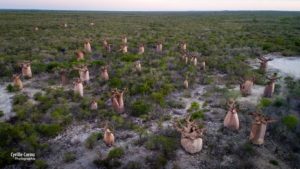
À l’intérieur des terres, la végétation est étonnante. Des baobabs aux formes étranges poussent au cœur de forêts épineuses riches en euphorbes et en Didiereaceae endémiques de l’île.
Ils composent un paysage presque irréel. Ces baobabs appartiennent à l’espèce Adansonia grandidieri.
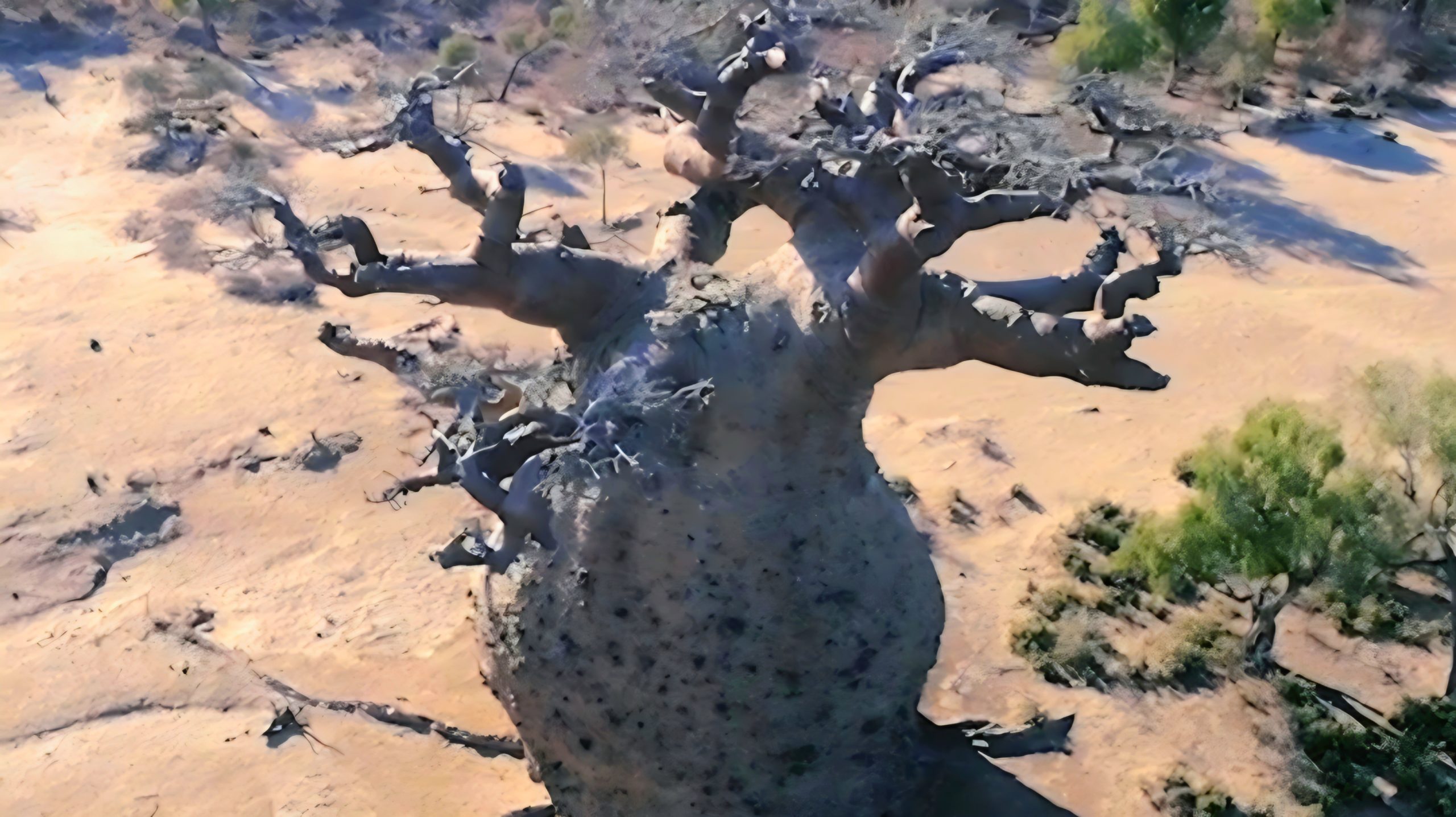
Habituellement de grande taille, les représentants de cette espèce ne mesurent ici que quelques mètres de hauteur. On les surnomme parfois « arbres bouteilles » en raison de leur forme ronde et trapue.
Ils portent des branches courtes et atrophiées, donnant à ces individus une silhouette très différente de celle des grands baobabs habituellement associés à l’espèce.
Cyrille Cornu
Scientifique, naturaliste, photographe et documentariste, spécialiste des baobabs de Madagascar.
NOTE INSTITUTIONNELLE ACTUELLE
La protection de l’Arbre ne dépend pas de l’attribution d’une personnalité juridique.
La Déclaration universelle des droits de l’Arbre ne confère pas, par elle-même, de personnalité juridique aux arbres, de capacité processuelle autonome ni de transfert de compétence.
Elle établit un cadre de principes fondé sur la reconnaissance de l’Arbre comme être vivant sensible, source de Vie et bien commun de l’humanité, ainsi que sur la responsabilité particulière de l’être humain à son égard.
Dans son prolongement est développé le projet de Convention internationale des droits de l’Arbre. Il s’agit d’un projet d’instrument juridique international en cours d’élaboration et de réflexion ; ce n’est pas, à ce jour, un traité international en vigueur.
Signer la pétition pour la Déclaration universelle des droits de l’Arbre
Découvrir le projet de Convention internationale des droits de l’Arbre
Consulter le Cadre officiel de la Déclaration universelle des droits de l’Arbre
English
The mysterious baobabs of Andavadoaka
On the west coast of Madagascar, the bay of Andavadoaka shelters a singular landscape in which Adansonia grandidieri baobabs display unusually low and stocky forms.
THE BAY OF ANDAVADOAKA
The bay of Andavadoaka is one of the most beautiful on the west coast of Madagascar. Its turquoise waters, rich marine environment and idyllic beaches attract many visitors every year.
It is located about 150 km north of the city of Toliara, at the end of a barrier reef extending for approximately 300 km.
The village of Andavadoaka has around two thousand inhabitants, most of them of Vezo origin. A semi-nomadic people, the Vezo derive most of their resources from the sea.
BAOBABS WITH ASTONISHING FORMS
Inland, the vegetation is remarkable. Strangely shaped baobabs grow in the heart of thorn forests rich in euphorbias and Didiereaceae endemic to the island.
They create an almost unreal landscape. These baobabs belong to the species Adansonia grandidieri.
Although this species normally reaches a considerable height, the individuals found here are only a few metres tall. They are sometimes referred to as “bottle trees” because of their rounded, stocky shape.
They bear short, atrophied branches, giving them a silhouette very different from the large baobabs usually associated with the species.
Cyrille Cornu
Scientist, naturalist, photographer and documentary filmmaker specialising in the baobabs of Madagascar.
CURRENT INSTITUTIONAL NOTE
Protection of the Tree does not depend upon the attribution of legal personhood.
The Universal Declaration of Tree Rights does not, by itself, confer legal personhood upon Trees, autonomous standing, or any transfer of public powers.
It establishes a framework of principles recognising the Tree as a sentient living being, a source of Life and a common good of humanity, together with humanity’s particular responsibility towards it.
In its continuation, the proposed International Convention on Tree Rights is being developed. It is a proposed international legal instrument under development and review; it is not, at present, an international treaty in force.
Sign the petition for the Universal Declaration of Tree Rights
Discover the proposed International Convention on Tree Rights
Read the Official Framework of the Universal Declaration of Tree Rights
Mise à jour doctrinale et institutionnelle / Institutional update: 13 August 2026